Indian Peaks
The Dog StarsThe Indian Peaks are the high-country setting where Hig seeks game, fishes altered streams, and walks deeper into the mountains during a period of grief. Their green woods and creeks offer a temporary refuge, but the warming water, disappearing trout, and uncertain seasons make the landscape an intimate record of ecological loss rather than an untouched sanctuary.
Setting and Uses
Hig describes the mountains as close enough to serve as a fallback when game near home becomes scarce. He goes there to hunt deer, but the journey matters beyond its practical yield: the woods feel to him like a church, and the creeks are places where he still hopes to find a surviving trout. This combination of subsistence and private solace distinguishes the mountains from the defended perimeter where his daily work is organized around security.
The terrain is not uniformly healthy. Hig passes through standing dead trees and beetle-killed forest to reach green woods, choosing fishing stretches that have survived or are beginning to recover. At one creek he sets down his pack, Green kayak sled, and rifle before assembling his Sage pack rod, a four-piece rod given to him by his father when Hig was sixteen. The familiar equipment connects this mountain practice to a life before the collapse, even as the forest around it has changed.
Ecological Change
The disappearance of trout is one of the losses Hig names most directly. He remembers that brook, rainbow, brown, cutthroat, and hybrid trout have vanished, and links their absence to streams that have become too warm. He continues to fish in the mountains, shifting to suckers and carp, but the change in species does not restore what has been lost. Later, even carp are becoming scarce: after catching five, Hig notices that they are thin and releases them carefully, then stops fishing. The episode makes ecological decline concrete through the altered catch and the decision to let the fish go.
The seasonal signs are also unreliable. In mid-April, a warm wind feels like spring, yet Hig notes that the old seasonal benchmarks have become largely nostalgic. Some recent winters brought mountain snow, while in two consecutive years the peaks were nearly dry. He regards this change as more frightening than attacks or disease, because the loss of trout is followed by the prospect of losing the creek itself. The mountains register a progression from species loss to threatened water and habitat.
A Place of Refuge and Exposure
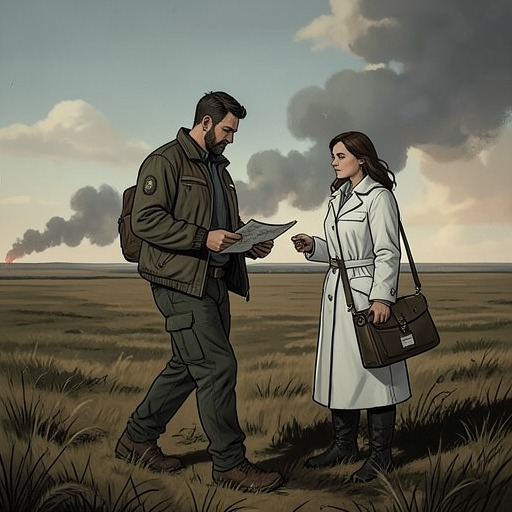
Hig walks west and then north into the Indian Peaks for three days, barely eating or sleeping and dragging his sled instead of using his usual quieter hunting routine. His noisy passage alerts animals, and he sees no game. On the third evening, late-spring snow begins as he stands near a small basin above treeline, beside a lake newly cleared of ice. The sudden cold and approaching storm shift the mountains from a place of chosen solitude into exposed ground where he recognizes the danger of being caught above the trees after dark.
That reversal gives the setting its double character. Hig goes into the mountains to get away, breathe, and recover a sense of continuity with the living world; there he also encounters weather, elevation, and isolation that can make continued travel unsafe. His panic at the prospect of nightfall and a storm shows that the refuge depends on conditions the landscape no longer reliably supplies.
Narrative Significance
The Indian Peaks gather Hig’s environmental grief into a specific place. His memories of fishing and of green forest persist, but they are set against warm streams, dry peaks, dead trees, and a catch that is changing or disappearing. The mountains therefore connect personal remembrance to material ecological change: what Hig mourns is not only a former way of life, but also the living conditions that made that life possible. Their beauty and their danger remain inseparable, offering respite without promising restoration.